Rare Disease Connect in Neurology
The Rare Disease Connect in Neurology (RDCN) is an international, UCB-funded educational program designed for healthcare professionals (HCPs) to improve the care, management, and understanding of, specifically, Myasthenia Gravis (MG).
KAL partnered with UCB to design the 2025 U.S. RDCN Annual Summit as both a scientific convening and a interdisciplinary workshop.
The objective was to create an event environment that could support rigorous clinical dialogue while making space for connection, reflection, and community among neurologists, specialists, and care teams working in generalized myasthenia gravis. From the beginning, we approached the summit as the foundation for patient outcomes inspired by each physicians unique perspectives from real world experience within treating patients.
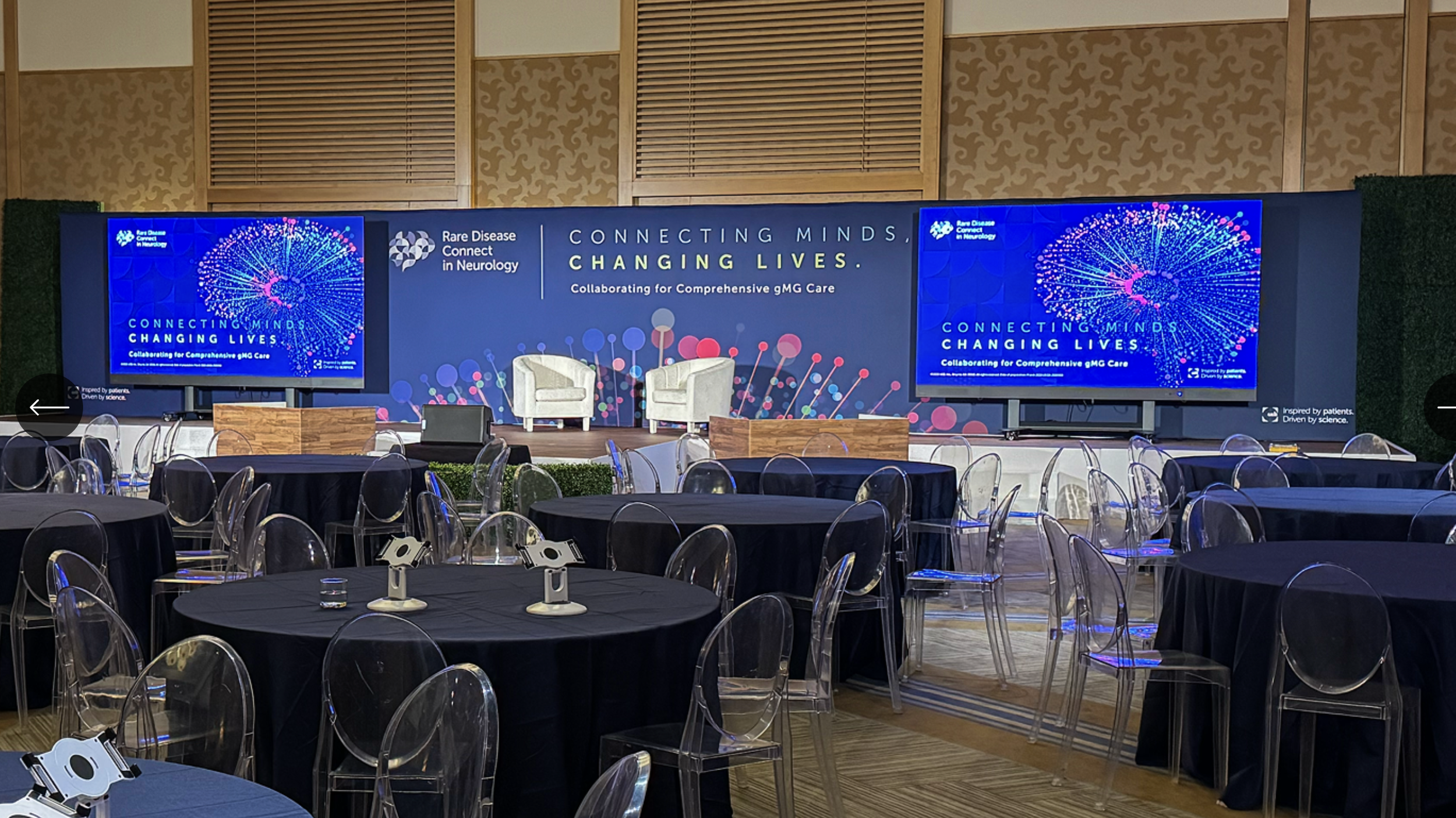
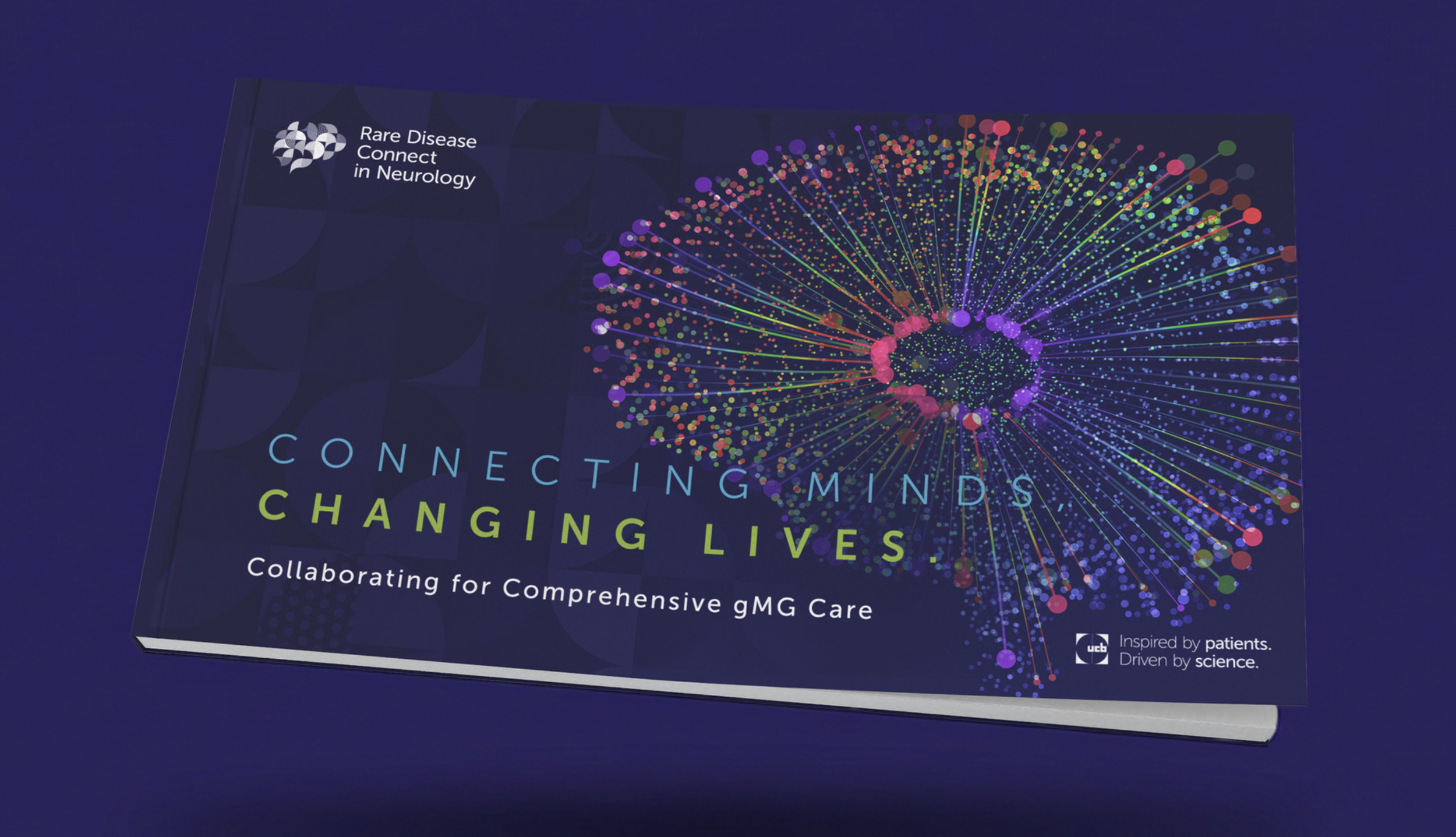
Before designing the physical or digital elements, we defined how the summit should feel as participants moved through it, from first awareness to arrival, immersion, and takeaway. The creative campaign, “Connecting Minds, Changing Lives,” became the organizing idea for the entire experience. It set a clear emotional and strategic direction, framing the summit as a place where clinical expertise, lived experience, and collaboration intersect to improve care. This message infused throughout the aspiration and emotion of the creative campaign informing the stage design, materials and large format graphics.
The landing page served as the first experience of the summit. We designed it as a clear, confidence building entry point that explained the purpose of RDCN, the focus on comprehensive gMG care, and the value of participating. Content was structured to answer practical questions quickly while reinforcing the larger story of community and progress. The visual language, including the data-inspired neural graphics and bold typographic hierarchy, established continuity with the in-room environment so that the experience felt cohesive, vibrant and captivating.
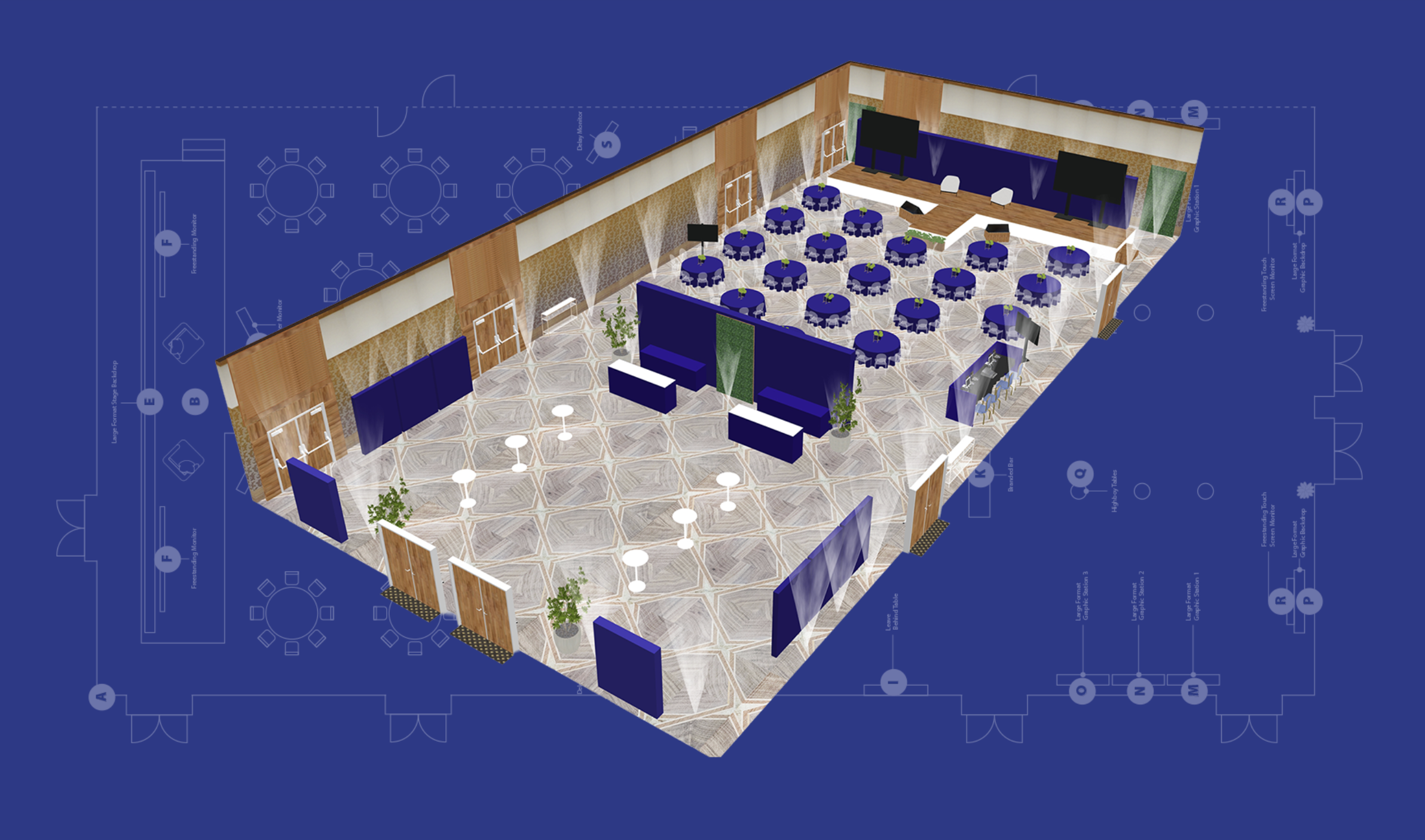
Inside the venue, event space design was treated as a three dimensional interface. We created a layout that balanced formal plenary moments with spaces for dialogue and informal exchange. The stage design anchored the room with a strong visual identity, using large format screens and layered graphics to create depth, clarity, and presence. The neural network motif, expressed through color, light, floral arragements, meeting materials and motion graphics, reinforced the idea of interconnected expertise while creating a sense of energy in the room. The spatial rhythm guided attention during presentations and opened up during breaks, encouraging movement and conversation without losing coherence.
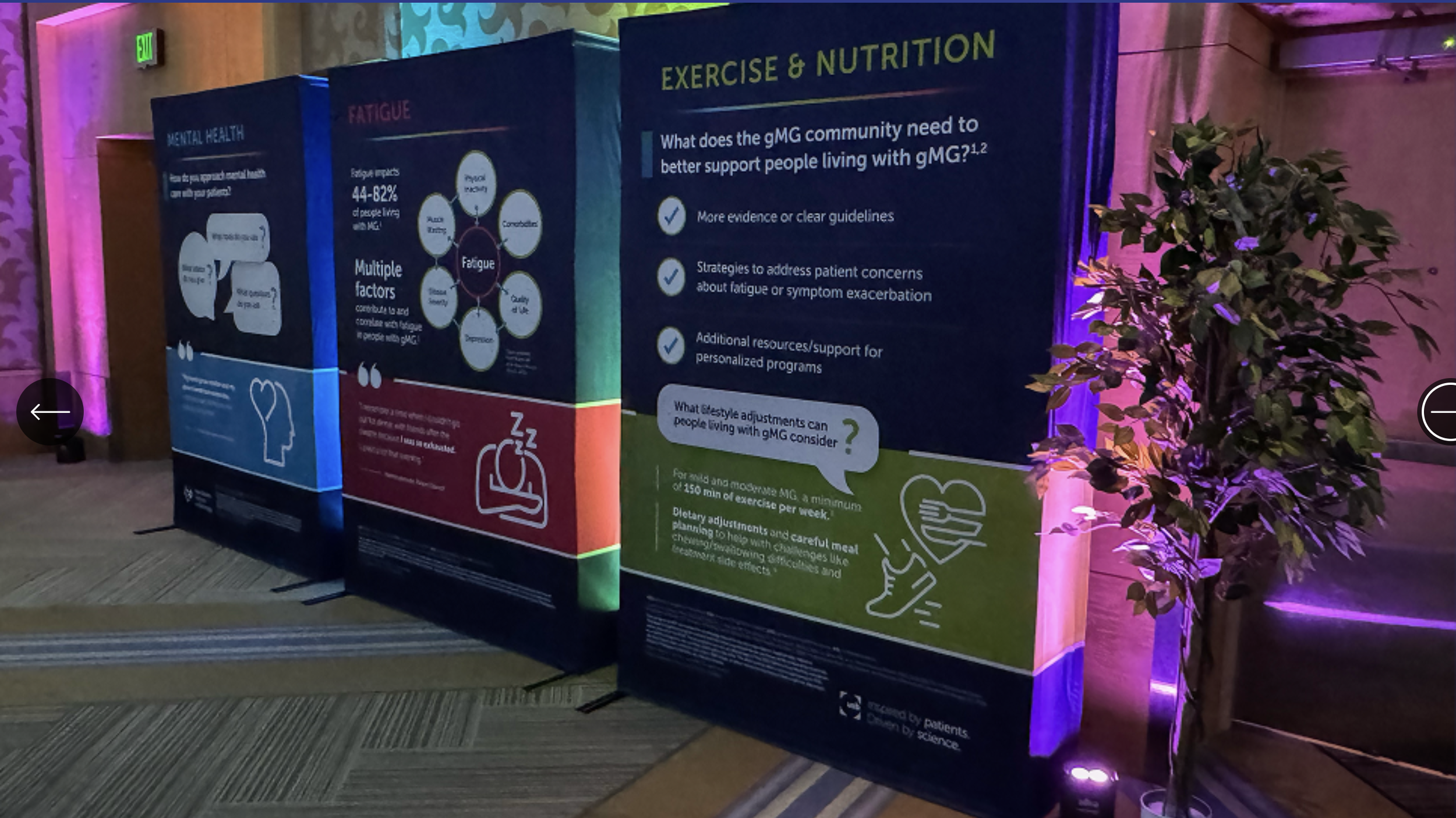
Large format graphics and environmental panels extended the narrative across the space. These installations were designed to translate complex topics such as fatigue, mental health, and exercise and nutrition in gMG into clear, approachable visual stories. The content was structured for fast scanning, allowing participants to engage with key insights between sessions while maintaining scientific integrity. This approach supported the summit’s goal of making education feel accessible without oversimplifying the science.
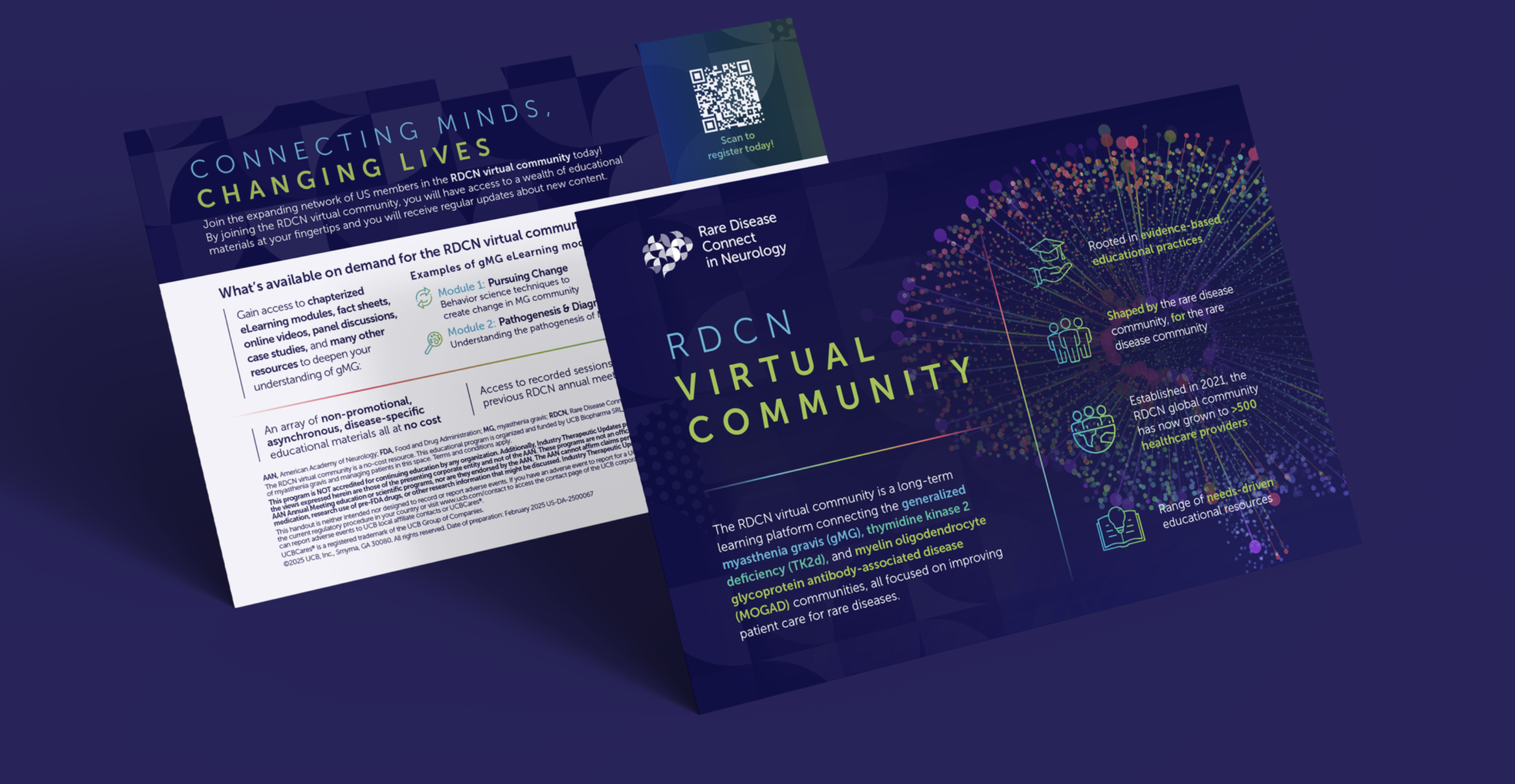
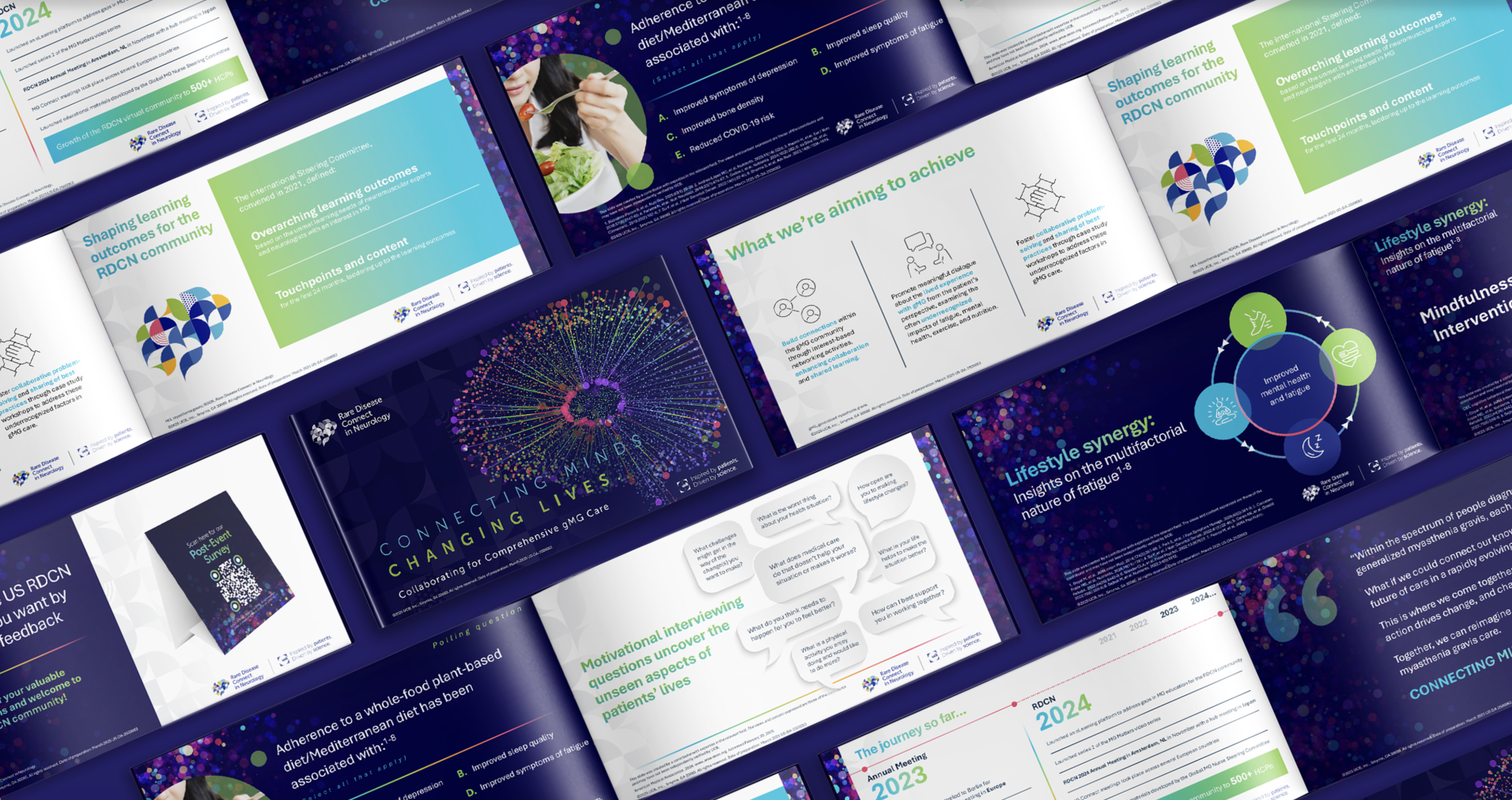
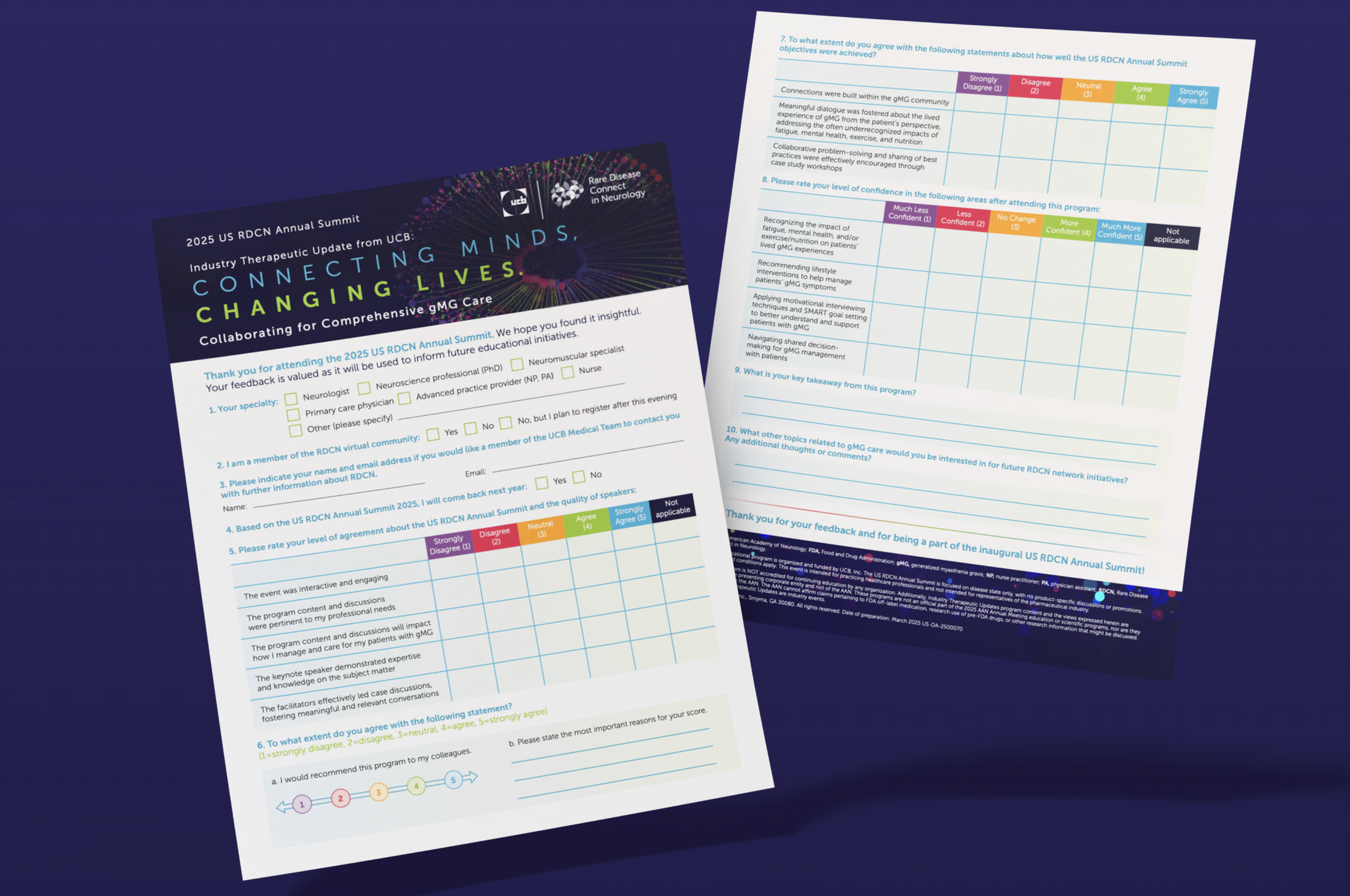
We developed the keynote presentation and content structures that supported clinical clarity, progressive disclosure of information, and consistency across speakers. Visual hierarchy, iconography, and data visualization patterns were established to ensure that complex concepts could be understood quickly and referenced later. Printed materials and takeaways extended this system, giving attendees tangible tools that reinforced the learning objectives of the summit and the ongoing mission of RDCN.
To open the experience, we produced a cinematic intro video that set the emotional tone for the summit. The film introduced the theme of connection across disciplines and perspectives, grounding the scientific program in its real world impact on people living with gMG. This opening moment was designed to focus attention, create shared context in the room, and signal that the summit was not only about information exchange, but the impact each of the attendees had by participating and sharing their unique perspectives and experiences.
Throughout the project, our role was to align creative expression with clinical purpose. Every element, from the campaign visuals to the physical environment, was built to help participants move easily between learning, discussion, and connection. By designing the space, campaign, and materials as one cohesive system, KAL helped translate a complex scientific mission into an experience that feels grounded, purposeful, and human.