
SMA XR
The Spinal Muscular Atrophy (SMA) XR experience was designed to rethink how complex anatomy and the science of muscle are explored in real-world settings.
When KAL partnered with Scholar Rock to design the experience, the objective was not simply to build an immersive visualization, but to translate dense clinical and anatomical knowledge around muscle groups and daily activities that define independence, into an interactive learning system that could be understood quickly, explored intuitively, and retained through its use of innovative technology. The experience needed to work in two modes, one as a high-impact demonstration in a live booth environment and as a structured educational experience.
Our process began with a deep dive on the life activities to be featured within the experience understanding muscle groups, their correlation to the daily activities and how to be highlight through movement and dependency one one muscle to the next. This understanding served as the foundation of the educational objectives, allowing us to map our conceptual thinking to what learners needed to understand, how those concepts should be revealed, and where interaction would meaningfully improve comprehension. We worked closely with advanced degree medical professionals and subject matter experts to structure the experience around accurate depiction, anatomical correctness and supported/cited data. This ensured that the XR experience was setup to communicate essential concepts at a glance, while supporting deeper inquiry for users who choose to engage further.
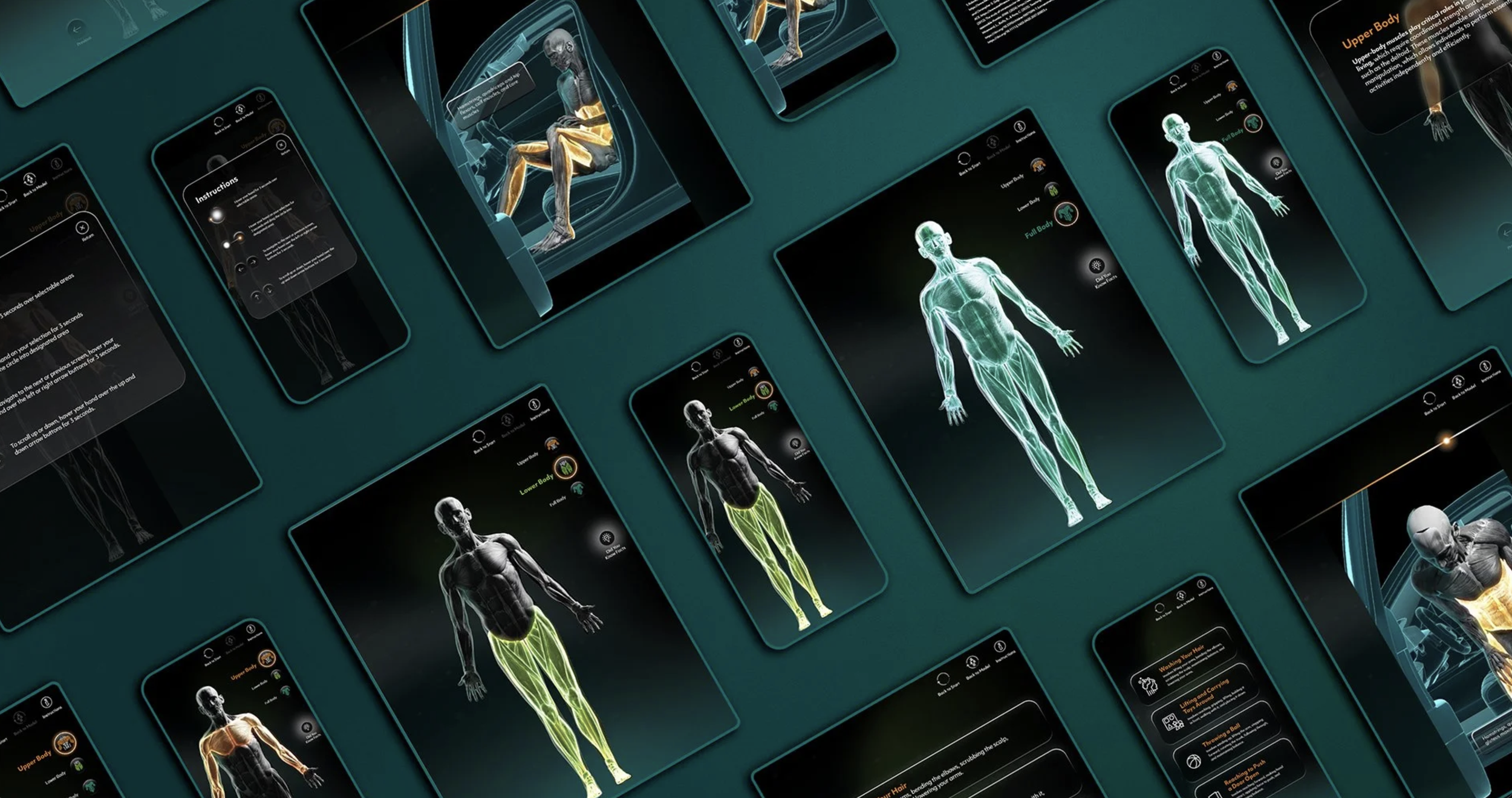
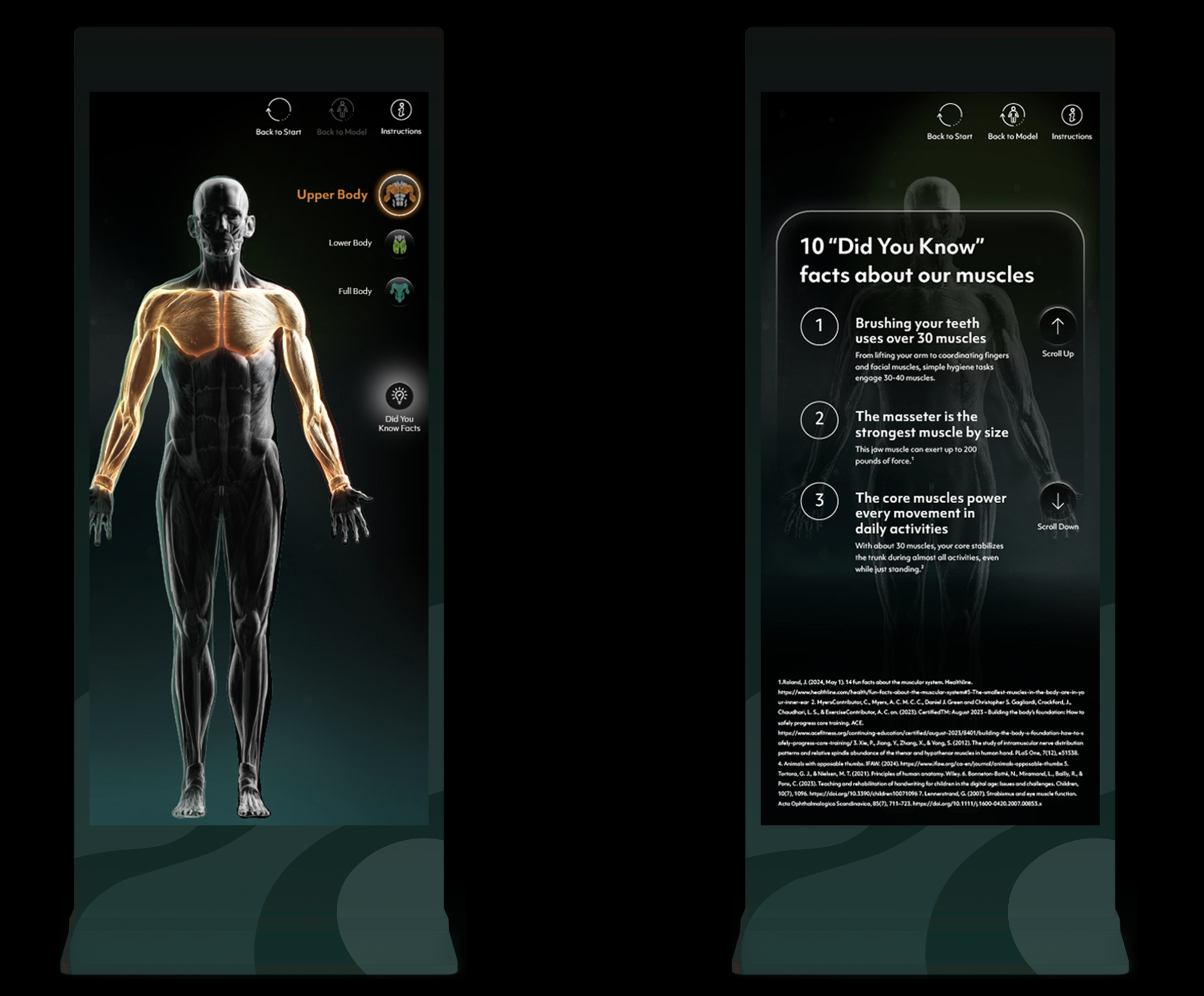
That content structure informed the user experience and interaction model. We designed the experience to feel immediately navigable, even for first-time XR users. The interface prioritizes clarity and orientation, with simple entry points, visible pathways between body regions, and intuitive gestures for exploring anatomy in context. Informational hierarchy met visual aesthetic as the interaction design allowed users to move from overview to detail without losing their sense of place. This approach supports both quick, high-level engagement in a booth environment and longer, more focused exploration in educational settings.
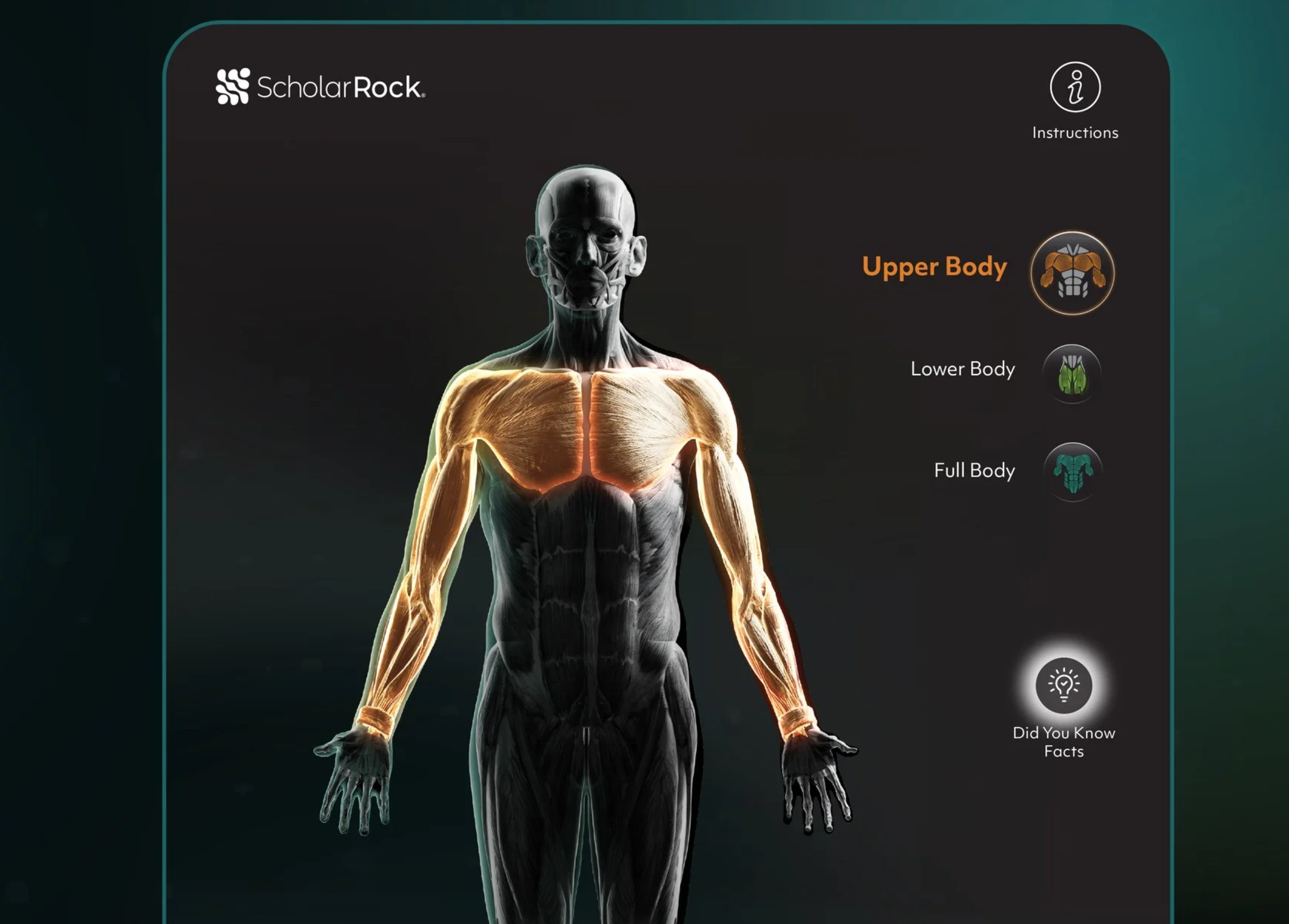
This user interface was design to feel calm, precise, and modern, using the human anatomy as a focal point to reinforce scientific credibility while supporting immersive exploration. The visual language anatomical structures and highlighted muscle groups to stand out clearly against the environment. Typography, spacing, and control placement were engineered for legibility at distance and clarity up close, ensuring the experience performs in both physical installations and tablet-based interactions. The interface was designed to disappear into the experience, allowing the content and interaction to lead rather than compete for attention.
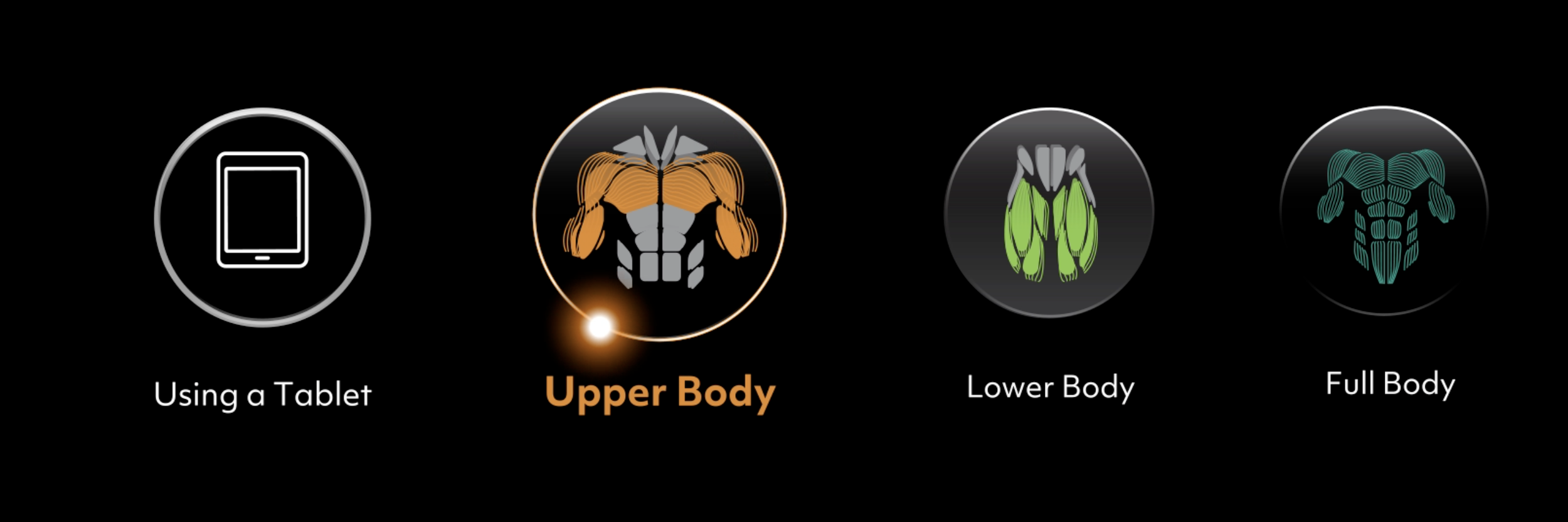
Iconography was created as a functional navigation layer within the experience. Each icon acts as a cognitive shortcut, helping users quickly understand where they are and what they can explore next. Upper body, lower body, and full-body pathways were given distinct visual signatures that remain consistent across the experience, reinforcing orientation as users move between views. The icon system was designed to work at small sizes, remain legible in low-light booth environments, and translate across digital and physical formats without losing clarity.
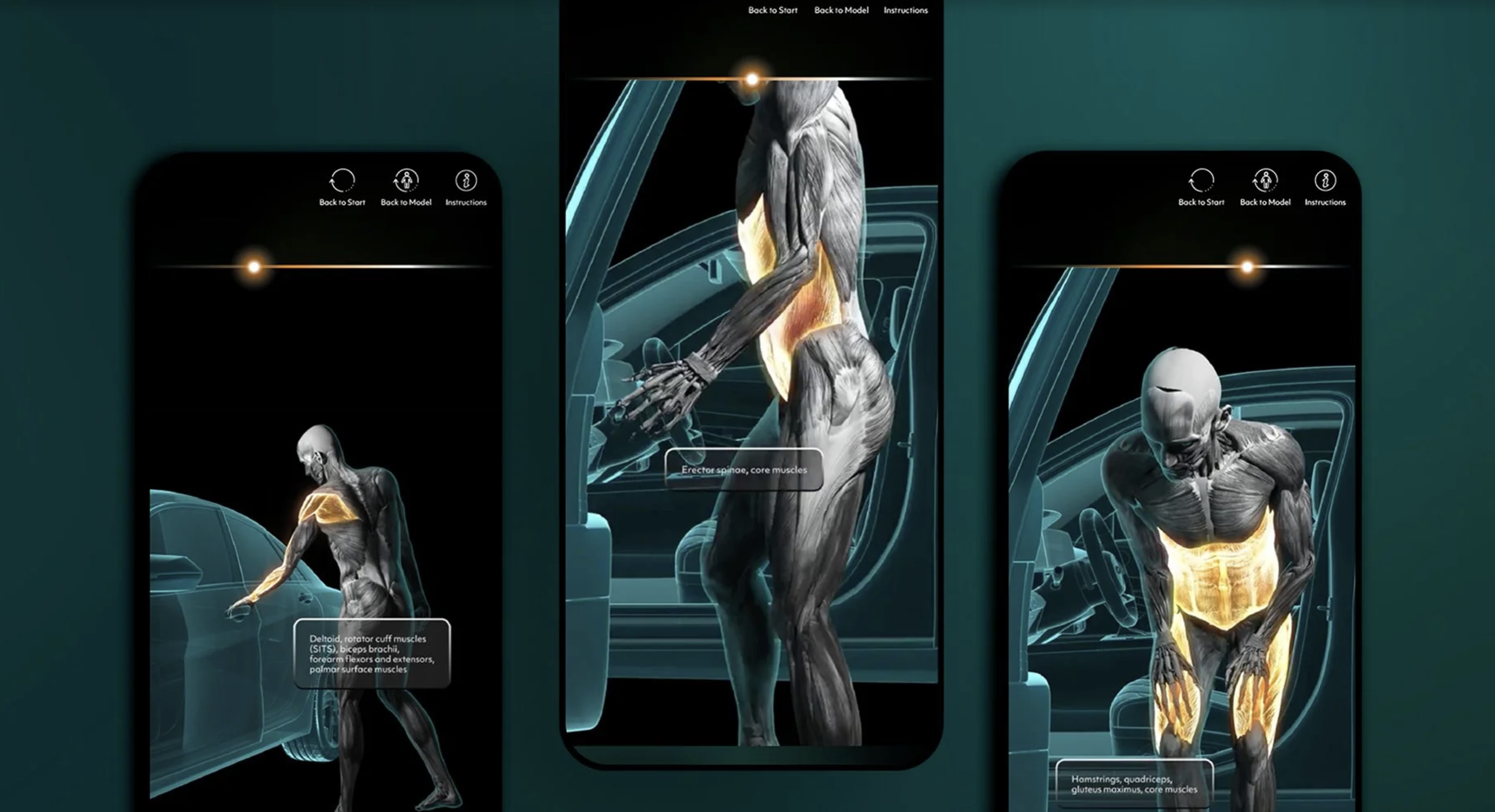
The 3D model concept was central to the credibility and effectiveness of the experience. Rather than presenting anatomy as a static visualization, the model was designed to feel dimensional, responsive, and grounded in real movement contexts. Muscle groups are illuminated in ways that clearly communicate function and relationship, allowing users to see how different systems activate in real-world scenarios. This approach helps bridge the gap between abstract anatomy and lived physical experience, reinforcing learning through spatial understanding.
Mini-animations were integrated to support comprehension and retention. The depictions of real life scenarios help HCPs connect structure to function while underscoring that even the smallest life events matter to those diagnosed with SMA. These moments of movement were designed to feel purposeful and restrained, reinforcing learning without overwhelming the interface.
How the XR was amortized across medias was also a key part of our strategy. We took it one step further to ensure the setup, hardware and assets could scale within a booth design extending the digital experience into physical space, treating the environment as a integrated compliment to the interface. The scalability of the technology ensures low cost implementation and an enduring quality to the asset that can be expanded upon very efficiently.
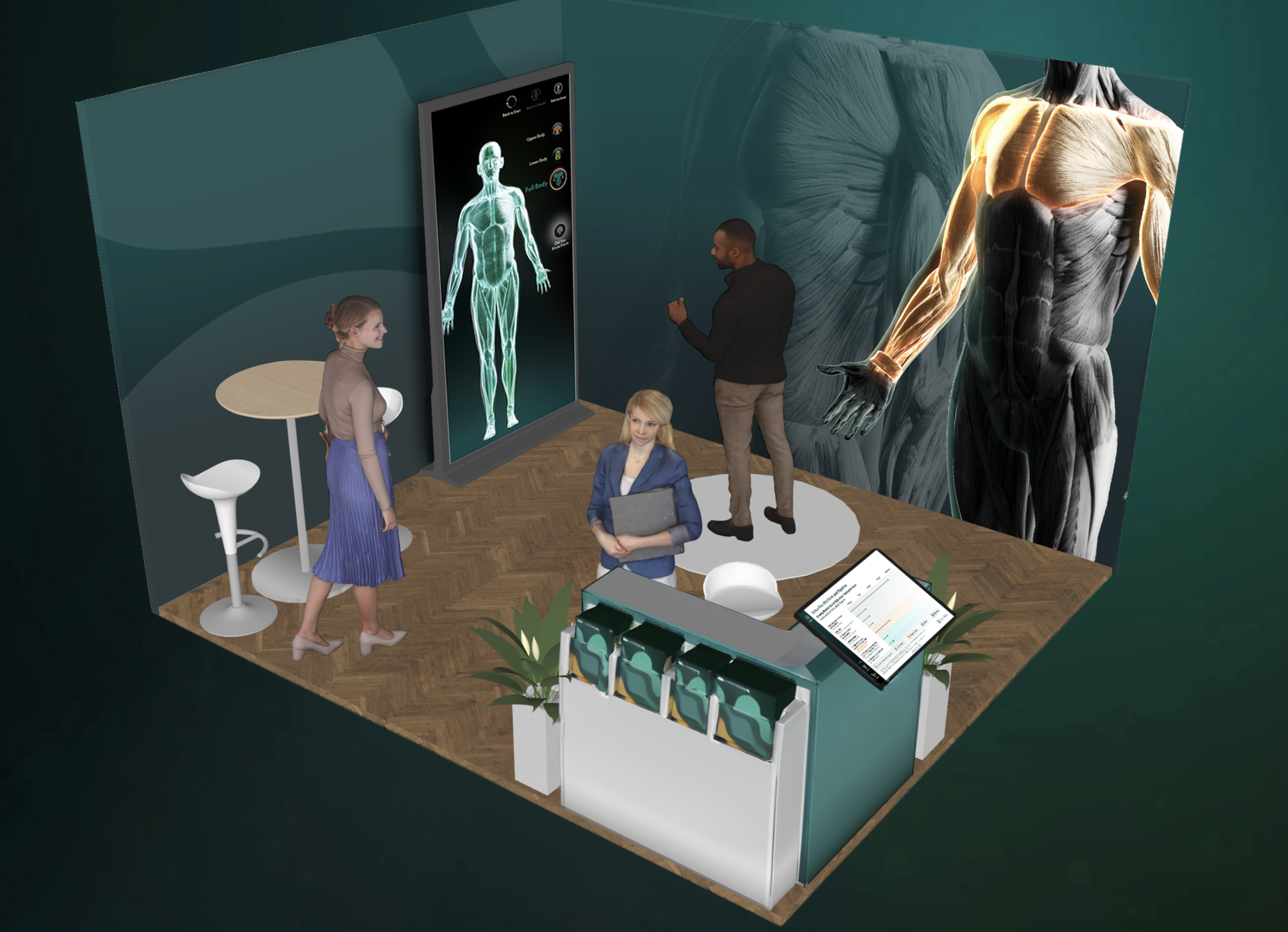
The physical installation was designed to draw attention from a distance, frame the XR experience clearly, and support comfortable interaction up close. Large-format anatomical visuals establish context before engagement, while the layout supports natural flow between demonstration, exploration, and conversation. We were tasked with developing booth renderings for 10x10 and 10x20 spaces to ensure the experience works not just as a visual centerpiece, but as a practical tool for education, dialogue, and engagement in live environments.
The final SMX XR experience brings together content strategy, interaction design, visual system, and physical environment into a single learning platform. It transforms complex anatomy into an intuitive, immersive experience that supports how people actually learn at a sensory level.
The result is a scalable XR system that communicates scientific rigor with clarity, designed to perform in high-impact environments while remaining grounded in meaningful educational use.